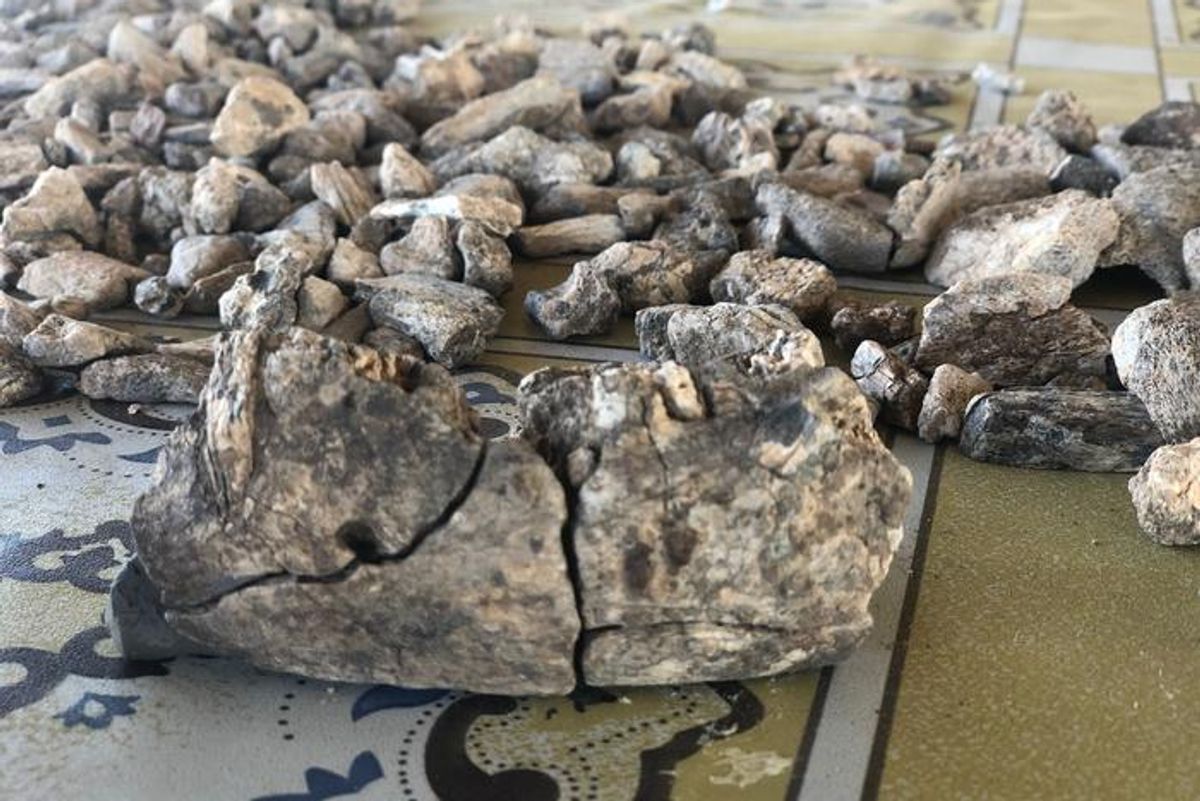
The pieced-together mandible of Paranthropus.(Image Credit: Alemseged Research Group/ University of Chicago)
Paleoanthropologists have uncovered a remarkable fossil in Ethiopia’s Afar Region: a partial lower jaw (designated MLP-3000) dating to around 2.6 million years ago that belongs to the robust hominin genus Paranthropus. This discovery fills a key geographical gap in the fossil record and suggests that ancient hominins were far more widespread across eastern Africa than previously thought.
Why the Afar Find Matters to Human Origins
Until now, researchers had unearthed abundant remains of several early hominin groups in the Afar, including genera such as Homo and Australopithecus, but Paranthropus had been conspicuously absent. This absence puzzled scientists, since Paranthropus fossils were known from other parts of Africa. The newly described jaw confirms that this genus, often nicknamed “Nutcracker Man” due to its large teeth and powerful chewing adaptations, did in fact occupy the region roughly 1,000 km north of its previously recognized range.
What the Fossil Reveals About Paranthropus
The new specimen, recovered from the Mille-Logya research area, was preserved in fragments and analysed using advanced imaging techniques like micro-CT scanning. Its morphology – especially dental features and jaw structure – matches what scientists expect for Paranthropus, a genus that evolved alongside other hominins but followed a different evolutionary path. Unlike early humans of the genus Homo, Paranthropus is thought to have used its robust jaws and molars to process tough, fibrous vegetation. :contentReference[oaicite:2]{index=2}
Researchers say that this find shows Paranthropus was not restricted to limited habitats or narrow ecological niches; instead, these hominins were adaptable to diverse environments, much like their contemporaries in the genus Homo.
Early Hominin Coexistence and Competition
The Afar Region has long been one of the richest sources of hominin fossils, yielding specimens such as the nearly 3-million-year-old jaw that represents some of the earliest known members of our own genus, Homo. Discoveries in nearby research areas have also revealed fossilized teeth attributed to previously unknown species of early hominins, indicating a diverse and crowded landscape of human ancestors more than 2.5 million years ago.
Rather than a single lineage steadily transforming over time, evidence from Afar supports the idea that multiple hominin lineages coexisted and potentially competed for resources. This includes robust forms like Paranthropus, agile bipeds such as early Homo, and other australopithecine relatives.
Rewriting the Early Hominin Distribution Map
Before this discovery, the absence of Paranthropus fossils in the Afar led some scientists to hypothesise that this genus might have avoided the region entirely, perhaps due to dietary or competitive disadvantages. However, the new jaw – now among the oldest Paranthropus fossils ever identified – shows those assumptions were likely the result of gaps in the fossil record rather than biological reality.
By expanding the known range of this genus to include northeastern Ethiopia, researchers can better understand the ecological flexibility and evolutionary pressures that shaped early hominin evolution. This find also highlights how volcanic and sedimentary layering in the Afar Basin continues to preserve snapshots of ancient life, offering ever-more detailed windows into our evolutionary past.
Future Directions in Human Evolution Research
Studies continue in the Afar and surrounding regions to uncover additional fossil evidence and refine our understanding of early hominin relationships. Ongoing research efforts aim to shed further light on how these ancient species adapted to changing climates and competed with each other, deepening our understanding of the human family tree’s complexity.
