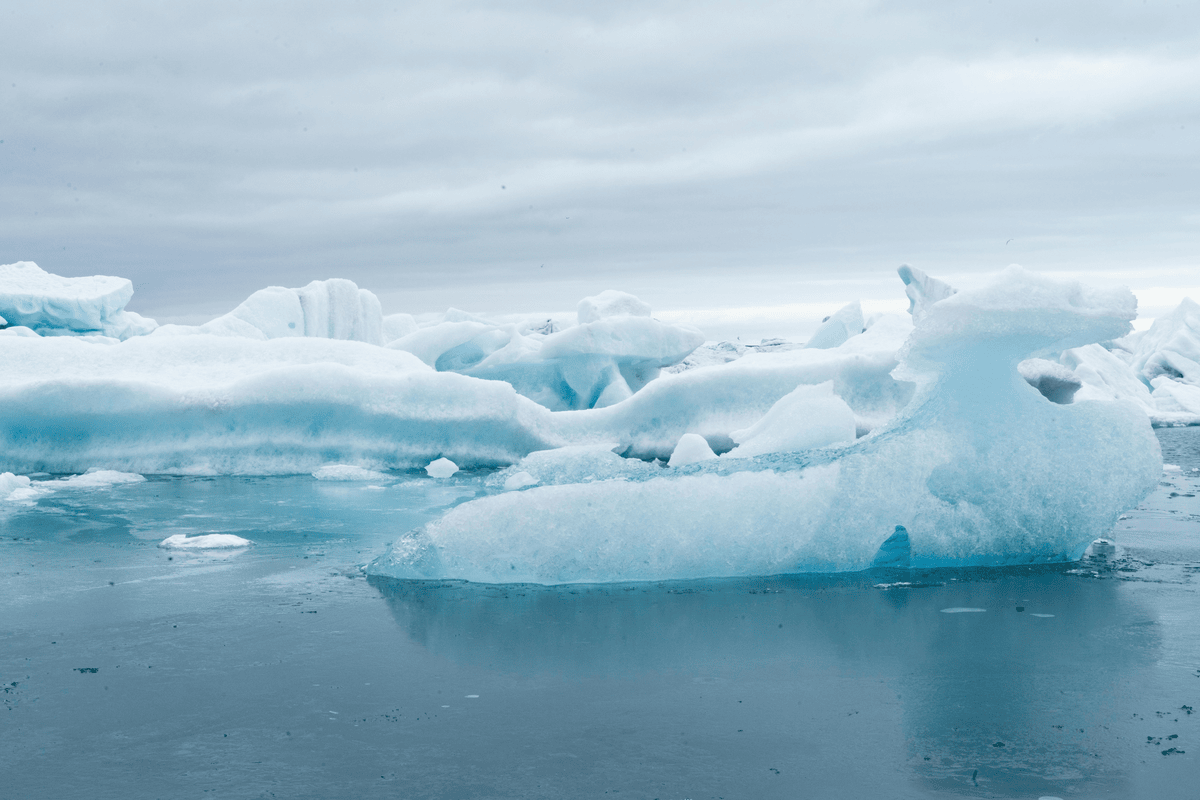
After nearly four decades adrift in Antarctic waters, the iconic iceberg A-23A has transformed into a vivid blue floating pool and is rapidly approaching complete disintegration. Scientists monitoring this colossal ice mass report that it may vanish within weeks as it encounters increasingly warm ocean currents near the southern tip of South America.
When A-23A first calved from Antarctica’s Filchner Ice Shelf in 1986, it spanned approximately 1,544 square miles—nearly twice the size of Rhode Island. The massive ice formation even hosted a Soviet research station at the time of its separation. For over three decades, the iceberg remained grounded in the shallow waters of the Weddell Sea, essentially frozen in place on the seafloor.
From Record-Holder to Rapidly Shrinking Giant
In January 2025, A-23A still measured around 1,410 square miles and earned a Guinness World Record as the largest existing iceberg. However, the situation changed dramatically over the following months. By early January 2026, the berg had shrunk to merely 456 square miles—roughly the size of Manhattan—after several major chunks broke off during the austral summer of 2025.
According to NASA satellite imagery captured in late December 2025, the iceberg has turned an alarming shade of vivid blue. This dramatic color change signals that extensive meltwater is pooling on its surface, creating what researchers describe as a giant swimming pool atop the ice. The weight of this accumulated water is forcing open cracks throughout the berg’s structure, accelerating its breakup.
The Science Behind the Blue Transformation
The striking blue coloration visible in recent satellite images represents more than just an aesthetic change. Ted Scambos, a senior research scientist at the University of Colorado Boulder, explained that the pooled meltwater creates immense pressure within the ice structure. As water accumulates in surface depressions and cracks, its weight forces these fissures to expand, initiating what scientists call ongoing disintegration events.
NASA imagery also reveals fascinating diagonal blue and white striations across the iceberg’s surface. These patterns are ancient scour marks created hundreds of years ago when the ice was still part of a glacier grinding across Antarctic bedrock. These ridges and valleys now channel the flow of meltwater across the disintegrating berg, creating a complex network of waterways on its surface.
Walt Meier, a senior research scientist at the National Snow and Ice Data Center, noted the remarkable persistence of these geological features, stating that it’s impressive these striations remain visible after massive snowfall accumulation and extensive melting from below over such an extended period.
An Extraordinary Journey Through Antarctic Waters
A-23A’s four-decade journey has been nothing short of remarkable. After remaining grounded for more than 30 years, the iceberg broke free in 2020 and began drifting through Antarctic waters. In a particularly unusual phenomenon, it spent several months trapped in a spinning ocean vortex known as a Taylor column before continuing its northward journey.
In early 2025, the iceberg nearly collided with South Georgia Island, raising concerns about potential impacts on the island’s important penguin colonies. Fortunately, ocean currents steered it clear of the sensitive breeding grounds. Throughout its journey, A-23A has provided scientists with invaluable data about how these massive ice structures behave and evolve.
Climate Implications and the Future of Antarctic Ice
While A-23A’s initial calving in 1986 is not believed to be directly linked to human-induced climate change, its current rapid disintegration serves as a stark reminder of our warming planet. The iceberg is currently drifting through waters approximately 3 degrees Celsius warmer than normal, and ocean currents are pushing it toward even warmer regions that will accelerate its final breakup.
Chris Shuman, a retired scientist from the University of Maryland Baltimore County who has monitored the iceberg throughout his career, expressed confidence that A-23A will not survive the austral summer. The combination of clearer skies, warmer air temperatures, and elevated water temperatures in this region—known among ice experts as an iceberg graveyard—creates conditions that rapidly erode these massive ice formations.
As recent reports indicate, scientists continue to study how warming oceans affect iceberg behavior and how melting glaciers contribute to sea level rise. The loss of A-23A represents more than just the end of a single iceberg—it offers crucial insights into the accelerating changes occurring in Antarctic ice systems.
A Bittersweet Farewell to a Scientific Icon
For the scientific community, A-23A’s impending demise marks a bittersweet moment. Researchers have tracked this iceberg for the majority of their careers, documenting its evolution and gathering unprecedented data about megaberg behavior. Shuman reflected on the significance of having satellite resources available to track the iceberg’s remarkably long and eventful journey, noting how difficult it is to accept that it won’t be with us much longer.
The freshwater discharge from A-23A’s melting ice is creating what NASA describes as a freshwater discharge plume, where meltwater mixes with smaller ice fragments floating nearby. This process contributes to changes in ocean salinity and temperature patterns that scientists are still working to fully understand.
As global temperatures continue to rise and polar ice faces increasing pressure from warming waters, the story of A-23A serves as both a scientific milestone and a cautionary tale about our changing planet. While this particular iceberg’s four-decade journey is ending, it leaves behind a wealth of knowledge that will help researchers better predict and understand the behavior of future Antarctic ice formations in an increasingly warming world.
The monitoring of A-23A continues as scientists document its final days, providing crucial data for understanding how climate change impacts Antarctic ice systems and global ocean patterns.
