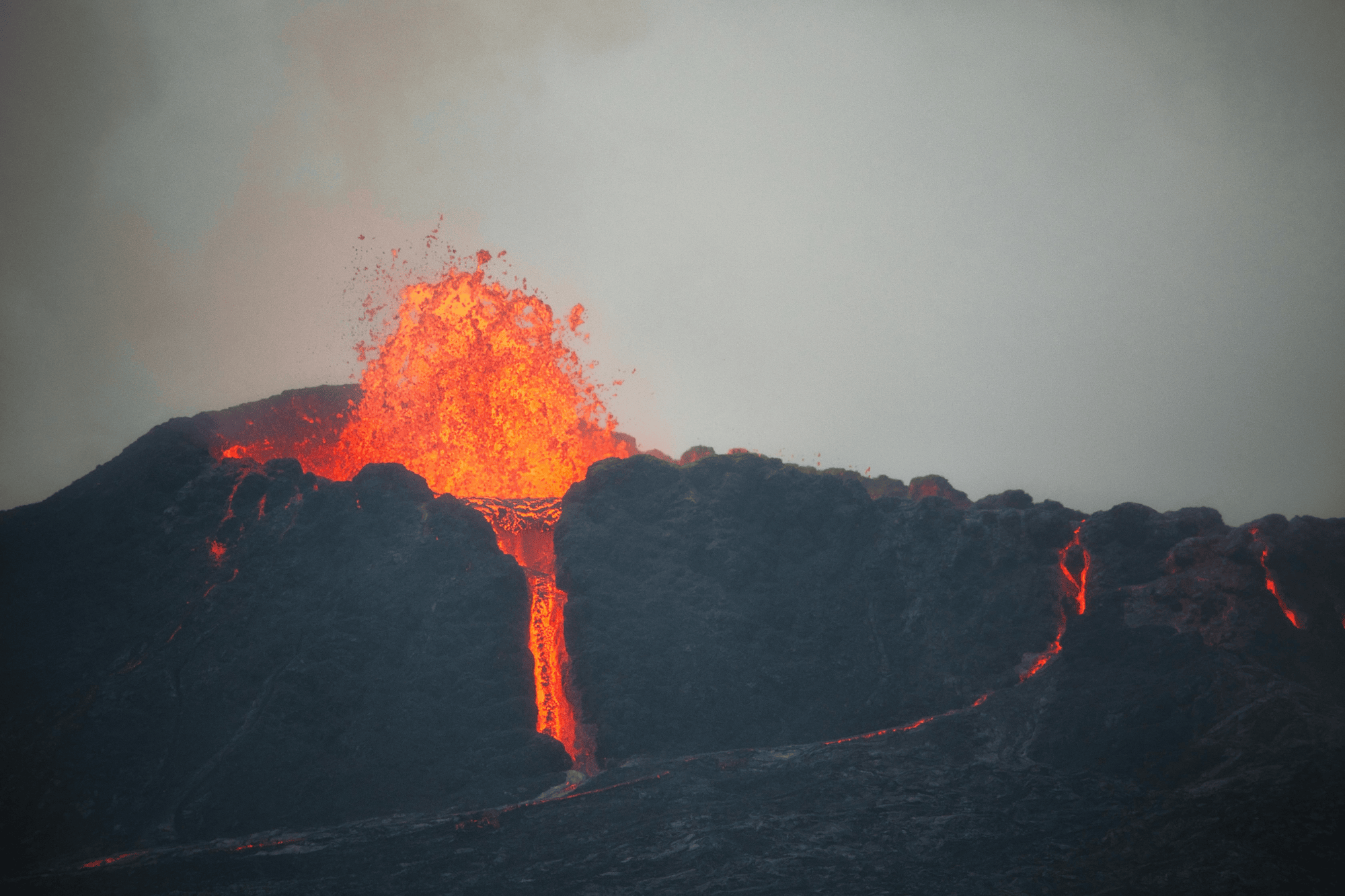
Revolutionary findings from an international team of geoscientists have fundamentally challenged our understanding of how Earth regulates its climate across geological time scales. Rather than volcanic arcs (the traditional suspects) the research reveals that mid-ocean ridges and continental rifts, where tectonic plates pull apart, have been the dominant force shaping our planet’s climate for the past 540 million years.
The study, published in Communications, Earth and Environment by researchers from the University of Melbourne and University of Sydney, utilized sophisticated computer modeling to reconstruct how carbon has cycled between Earth’s interior, ocean floors, and atmosphere throughout geological history. Their models successfully predicted major greenhouse and icehouse climate periods, providing unprecedented insights into the deep mechanisms that have maintained Earth’s habitability.
Tiny Ocean Creatures Changed Earth’s Carbon Story
One of the most surprising revelations concerns the relatively recent dominance of volcanic arc emissions, a phenomenon that only emerged within the last 120 million years. The key to understanding this shift lies with microscopic marine organisms called planktic calcifiers, tiny phytoplankton that possess an extraordinary ability to convert dissolved carbon into solid calcite.
These remarkable creatures evolved approximately 200 million years ago and spread throughout global oceans around 150 million years ago. As they proliferated, they fundamentally altered the ocean’s role in carbon sequestration. When planktic calcifiers die, their calcium carbonate shells sink to the seafloor, creating vast deposits of carbon-rich sediments, sometimes accumulating to hundreds of meters thick over millennia.
According to the research published in Nature Communications, this biological innovation dramatically increased the carbon content of oceanic sediments. As tectonic plates carry these sediment-laden rocks toward subduction zones (where one plate dives beneath another) the trapped carbon gets recycled back into Earth’s interior. Eventually, this carbon re-emerges through volcanic arcs like those encircling the Pacific “Ring of Fire,” contributing significantly to atmospheric carbon dioxide levels.
Rewriting the Climate History Playbook
Before the proliferation of planktic calcifiers, the carbon cycle operated quite differently. The research team discovered that for most of Earth’s geological history, mid-ocean ridges and continental rifts (locations where tectonic plates diverge) played the starring role in atmospheric carbon regulation rather than supporting characters.
Mid-ocean ridges form at boundaries where tectonic plates move away from each other, allowing magma to rise from Earth’s mantle and create new oceanic crust. This process releases carbon dioxide that had been locked within the planet’s interior. Continental rifts represent similar divergent boundaries on land, where continents are being pulled apart by tectonic forces.
Using their advanced models, researchers traced carbon’s journey as it moved between different reservoirs over 540 million years. During greenhouse periods (when Earth was significantly warmer) more carbon was released from these divergent boundaries than could be trapped in seafloor sediments. The atmospheric carbon dioxide levels soared, sometimes exceeding 1,000 parts per million during the Cretaceous period roughly 145 to 66 million years ago, pushing global temperatures up to 10°C hotter than today.
Conversely, during icehouse climates, carbon sequestration in Earth’s oceans dominated, drawing down atmospheric carbon dioxide and triggering planetary cooling. These shifts between extreme climate states weren’t random fluctuations but predictable consequences of how tectonic plates transported carbon around the planet.
The Deep Carbon Conveyor Belt
The mechanism driving these climate oscillations operates through what scientists call the deep carbon cycle, a planetary-scale conveyor belt that continuously moves massive volumes of carbon between Earth’s surface and interior. This system functions across timescales spanning millions of years, fundamentally different from the rapid carbon cycle involving living organisms, atmosphere, and surface oceans.
Professor Dietmar Müller of the University of Sydney, lead corresponding author of the study, explained that changes in carbon released from spreading plates shaped major historical climate transitions. These include the Late Paleozoic ice age, the warm Mesozoic greenhouse world, and the emergence of our current Cenozoic icehouse climate characterized by polar ice caps.
The deep carbon cycle according to NASA represents one of Earth’s most crucial life-support systems. When tectonic processes operate at moderate speeds (neither too fast nor too slow) Earth maintains what scientists call a “Goldilocks climate,” remaining habitable without swinging to extremes.
Mountain Building and Climate Cooling
The transition from the Cretaceous hothouse to our modern icehouse climate illustrates the complex interplay between tectonic activity and climate regulation. As the supercontinent Pangaea progressively disintegrated, new ocean gateways formed and dispersed continents eventually began colliding with each other, creating massive mountain ranges from the Himalayas to the Alps starting around 50 million years ago.
These collisions dramatically slowed tectonic plate movement, which initially seems counterintuitive for climate cooling since slower tectonics should mean reduced volcanic carbon dioxide emissions. However, the research revealed a hidden mechanism: mountain building initiated massive erosion processes that ultimately stored away vast quantities of carbon.
When rainwater containing dissolved carbon dioxide reacts with mountain rocks, it breaks them down. Rivers then carry these dissolved minerals to the ocean, where they eventually form carbonate sediments. This weathering process effectively removes carbon dioxide from the atmosphere and locks it away in ocean floor sediments for millions of years, a natural carbon capture system operating at geological scales.
Implications for Modern Climate Understanding
The findings provide crucial context for our current climate crisis. Dr. Ben Mather, ARC Early Career Industry Fellow at the University of Melbourne and lead author, emphasized that understanding how Earth controlled its climate in the geological past highlights how unusual the present rate of change truly is. Human activities are now releasing carbon far faster than any natural geological process observed in Earth’s history.
According to previous research from the University of Sydney, the Cretaceous hothouse climate resulted from very fast-moving tectonic plates that dramatically increased carbon dioxide emissions from mid-ocean ridges. This demonstrates that plate velocity directly influences how much carbon gets injected into the atmosphere.
The research adds to mounting evidence that atmospheric carbon dioxide levels serve as the primary trigger for major climate swings. Over geological timescales, the balance between volcanic outgassing and carbon burial through weathering and sedimentation ultimately ensures Earth remains habitable. However, this natural thermostat operates across millions of years, far too slowly to counteract the rapid carbon dioxide increases caused by burning fossil fuels.
Future Climate Modeling and Predictions
This groundbreaking work provides climatologists with powerful new tools for understanding Earth’s climate system. By successfully predicting past climate states using tectonic reconstructions and carbon cycle modeling, the research validates these approaches for future applications. The models can now incorporate these refined understandings of how carbon moves between deep Earth reservoirs and the surface environment.
The study also highlights several critical knowledge gaps requiring further investigation. Scientists need better constraints on how much carbon is stored in subducting slabs, more detailed reconstructions of past plate movements, and improved understanding of how different tectonic settings contribute to carbon outgassing over time.
Professor Mather noted that these findings reshape our understanding of past climates and help refine future climate models by revealing mechanisms that were previously underappreciated. The intricate balance between carbon emissions from Earth’s surface and carbon trapped in seafloor sediments ultimately controls our planet’s climate on geological timescales.
For researchers working on climate mitigation strategies, the geological perspective offers both caution and inspiration. While Earth’s natural carbon cycle has successfully regulated climate for billions of years, maintaining conditions suitable for life, the system operates far too slowly to offset human-caused climate change. Nevertheless, understanding these natural processes (particularly how weathering and sediment burial sequester carbon) may inform technological approaches to carbon capture and storage.
As humanity grapples with accelerating climate change, this research underscores both the resilience and the limits of Earth’s natural climate regulation systems. The planet has survived extreme climate swings before, but never at the pace we’re imposing today. Understanding these deep-time processes illuminates not just our past, but potentially our future as well.
Study Citation: B.R. Mather et al., “Carbon emissions along divergent plate boundaries modulate icehouse-greenhouse climates,” Communications Earth & Environment (2026). DOI: 10.1038/s43247-025-03097-0
