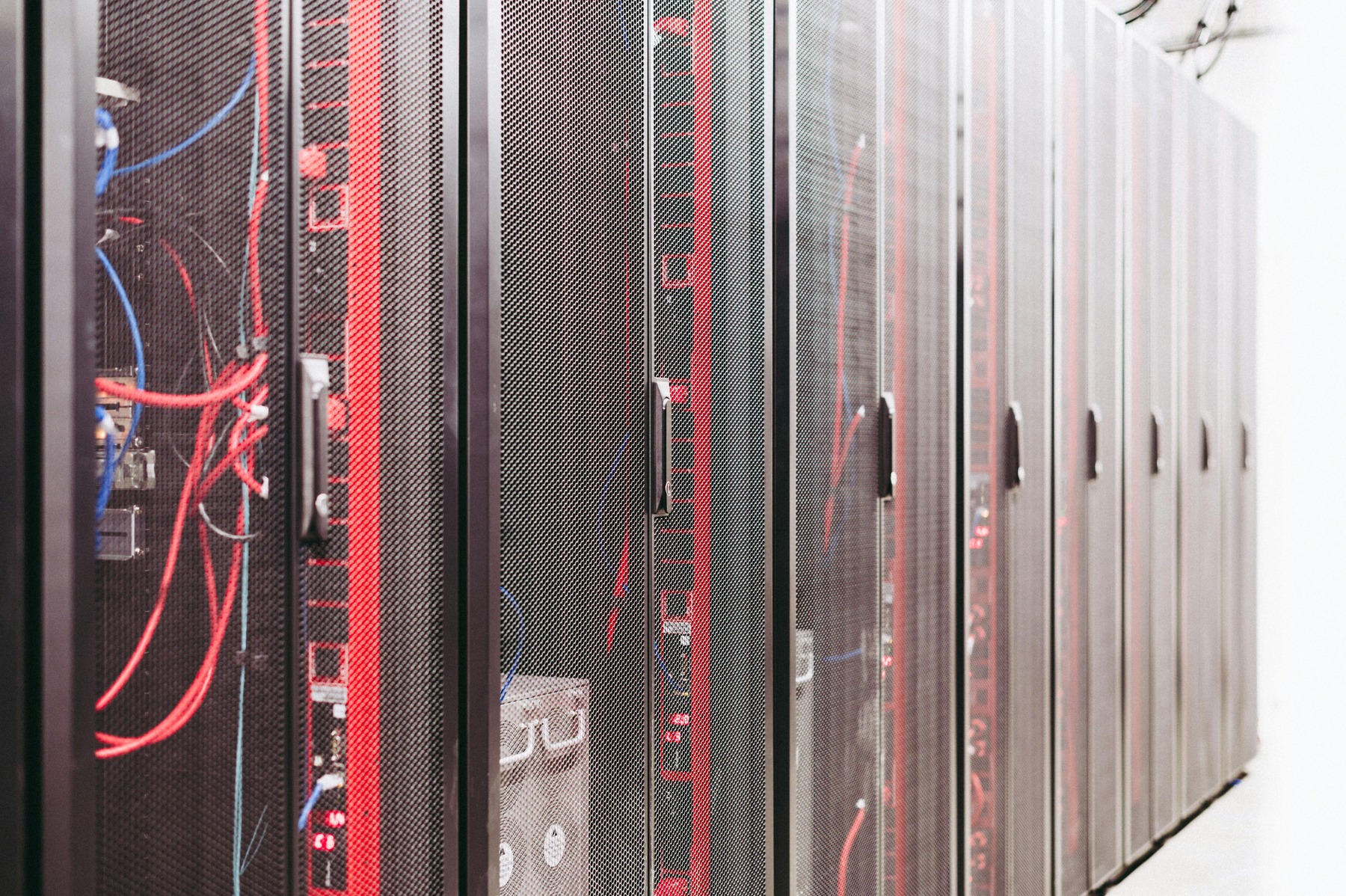
The artificial intelligence revolution is triggering an unprecedented energy crisis that could single-handedly derail America’s climate commitments by decade’s end. New research reveals that unless dramatic action is taken immediately, the explosive growth of power-hungry AI data centers will consume more than 12 percent of US electricity by 2030, equivalent to powering 16 cities the size of Chicago, while emitting as much carbon dioxide as 10 million cars annually.
Yet amid these alarming projections, scientists and industry leaders have identified a clear roadmap that could slash these environmental impacts by approximately 73 percent for carbon emissions and 86 percent for water consumption. The key lies in three critical interventions: strategic geographic placement of facilities, accelerated grid decarbonization, and operational efficiency improvements. However, the window for implementing these solutions is rapidly closing.
The Staggering Scale of AI’s Energy Appetite
When Cornell University systems engineer Fengqi You began modeling data center environmental footprints three years ago, the AI boom was just beginning. Even then, his team recognized something crucial was missing from the conversation about artificial intelligence’s meteoric rise. Their groundbreaking study, published in Nature Sustainability after three years of comprehensive research, delivers numbers that are nothing short of staggering.
The research analyzed data from across eight major US states, breaking down grid compositions and water resources region by region to reveal how the data center explosion will affect different parts of the country. Professor You, the Roxanne E. and Michael J. Zak Professor in Energy Systems Engineering at Cornell, explained that it became immediately clear AI growth would need alignment with power-grid planning, water management, and resource allocation, yet these discussions were virtually absent from industry discourse.
By 2030, depending on how rapidly the AI industry expands, American data centers could annually consume as much water as 10 million people and emit carbon dioxide equivalent to adding 5 to 10 million vehicles to the nation’s roads. These estimates place the AI industry’s annual resource consumption in the same range as entire states, representing a fundamental transformation in how America generates and uses electricity.
According to research from Cornell University, AI workloads consume three to five times more energy than traditional computing operations. A single supersized “data campus” (like the one rising from the ashes of Pennsylvania’s shuttered Homer City coal plant) will draw as much power as all residential homes in the Philadelphia metropolitan area combined.
Climate Goals Hanging in the Balance
The timing couldn’t be worse for America’s climate ambitions. A comprehensive analysis by the Center for Biological Diversity reveals that if current trajectories continue, the massive expansion of data centers (powered primarily by fracked natural gas) could account for 10 percent of economy-wide emissions and a devastating 44 percent of power sector emissions allowable under the US 2035 climate target, formally known as the nationally determined contribution.
To put this in stark perspective: meeting the climate target established under the Paris Agreement would require all other electricity-consuming sectors to increase their carbon emission cuts by 60 percent just to compensate for data centers’ fossil-fueled pollution. This creates an impossible mathematical equation for climate stabilization unless fundamental changes occur in how AI infrastructure is powered.
Jean Su, energy justice director at the Center for Biological Diversity and co-author of the Data Crunch report, didn’t mince words about the severity of the situation. The current administration’s push for fast-tracked AI data center development fed by gas and coal threatens to entrench more fossil fuels precisely when rapid phaseout is essential. The report demonstrates how the United States stands poised to trigger an explosion of dirty data center emissions at the worst possible moment for planetary health.
The concentration of data centers in certain regions exacerbates these problems. Northern Virginia’s “data center alley” outside Washington, D.C., remains the world’s densest data center hub, clustering there over decades due to tax incentives, fiber infrastructure, and proximity to federal agencies. However, as Cornell’s research warns, Northern Virginia lacks sufficient resources to sustainably support AI industry growth, facing severe constraints in both energy supply and water availability.
The Renewable Energy Solution Exists, But Time Is Critical
Despite these dire warnings, the research offers genuine hope through a detailed roadmap for sustainable AI infrastructure development. The study demonstrates that if the projected AI surge were instead powered fully by renewables, it would account for only 4 percent of power sector emissions and a negligible amount of economy-wide emissions – a dramatic contrast to the fossil-fueled scenario.
Professor You’s team identified location as perhaps the single most important factor. Many current data center clusters are being constructed in water-scarce regions like Nevada and Arizona, while in hubs like northern Virginia, rapid facility clustering strains local infrastructure and water resources beyond sustainable limits. Relocating facilities to regions with lower water stress and improving cooling efficiency could slash water demands by approximately 52 percent, with total water reductions potentially reaching 86 percent when combined with other best practices.
The research points specifically to Midwestern states and the “windbelt” region (particularly Texas, Montana, Nebraska, and South Dakota) as offering the optimal combined carbon-and-water profile for AI infrastructure development. These states possess sufficient water supplies, excellent potential for clean energy generation, and adequate power infrastructure to support massive data center growth without the resource conflicts plaguing current hub locations.
According to analysis published by Yale Environment 360, strategic geographic distribution of AI infrastructure away from Northern Virginia toward states with more sustainable prospects represents a critical opportunity that policymakers must seize immediately. The decisions made about new projects right now will determine whether the AI boom becomes an environmental catastrophe or a catalyst for renewable energy transformation.
Technological Innovation and Grid Decarbonization
Beyond geographic considerations, the path to sustainable AI requires simultaneous advances on multiple fronts. Operational efficiency improvements through energy- and water-efficient technologies offer substantial benefits. Advanced liquid cooling systems, improved server utilization, optimized power usage effectiveness, and sophisticated thermal management could potentially remove another 7 percent of carbon dioxide emissions while lowering water consumption by 29 percent.
Google has demonstrated what’s possible through aggressive efficiency measures. In 2024, the company’s global data center fleet achieved an average annual power usage effectiveness of 1.09, compared with the industry average of 1.56, meaning Google facilities used approximately 84 percent less overhead energy for every unit of IT equipment energy. The company has committed to operating with 100 percent renewable energy around the clock by 2030, though even Google acknowledges this goal has become “very difficult” as AI workloads explode.
Grid decarbonization represents another crucial piece of the puzzle. However, even in ambitious high-renewables scenarios, decarbonizing the electricity grid alone cannot solve the problem. Cornell’s analysis shows that by 2030, approximately 11 million tons of residual emissions would remain even under optimistic clean energy deployment, requiring roughly 28 gigawatts of wind or 43 gigawatts of solar capacity to reach net-zero, far exceeding current renewable energy installation rates.
The challenge stems from AI’s explosive growth outpacing grid transformation. Even as each kilowatt-hour becomes progressively cleaner, total emissions can still rise when AI computing demand expands faster than the grid decarbonizes. This dynamic creates what researchers call a “treadmill effect,” where sustainability efforts constantly chase accelerating demand without ever catching up unless both renewable deployment and efficiency improvements occur simultaneously.
Policy Interventions and Corporate Responsibility
Achieving sustainable AI infrastructure requires coordinated action across industry, utilities, regulators, and policymakers. The Biden administration’s 2035 climate goals, slashing greenhouse gas emissions across the economy and transitioning the power sector away from carbon pollution entirely, remain technically achievable according to You’s study, but only if AI infrastructure development aligns with major policy changes.
Researchers advocate for tighter regulation, greater transparency, and AI-specific benchmarks for energy and water usage, similar to fuel efficiency standards for vehicles. These could include requirements for 24/7 clean energy tracking rather than simple annual renewable energy certificate purchases, mandatory efficiency standards for new data center construction, and prioritization of facility locations in regions with abundant renewable energy resources and adequate water supplies.
According to the Center for Biological Diversity report, guardrails are needed at both global and national levels to curb data centers’ immense climate emissions. This includes adoption of public-interest frameworks for permitting decisions, requirements for on-site and distributed renewable energy generation, energy storage systems, and meaningful community input in decisions about whether new projects will actually benefit local residents.
Major technology companies have begun responding to these pressures, though progress remains uneven. Amazon, Microsoft, Meta, and Google collectively represent the four largest purchasers of corporate renewable energy power purchase agreements, having contracted over 50 gigawatts, equal to the generation capacity of Sweden. Microsoft announced a monumental $10 billion renewable energy deal with Brookfield Asset Management, while also launching data centers constructed with mass timber that reduces embodied carbon footprint by up to 65 percent compared to typical precast concrete.
The Build-Out Moment: Now or Never
Professor You emphasizes that we’re currently at what he calls “the build-out moment”, a pivotal period when the AI infrastructure choices made this decade will fundamentally determine whether artificial intelligence accelerates climate progress or becomes a massive new environmental burden. The decisions about where to locate facilities, how to power them, and what efficiency standards to implement cannot be delayed or reversed once billions of dollars in concrete, steel, and electrical infrastructure are locked into place.
The research makes clear that siting, grid decarbonization, and efficient operations must work together synergistically to achieve the dramatic reductions needed. No single intervention suffices, 73 percent carbon reductions and 86 percent water reductions require implementing all available strategies simultaneously. This means prioritizing Midwestern locations with renewable energy potential, accelerating clean energy deployment in regions where AI computing expands, deploying cutting-edge cooling and efficiency technologies, and establishing regulatory frameworks that prevent the worst environmental outcomes.
For regions like New York State, which maintains a relatively clean electricity mix through nuclear power, hydroelectricity, and growing renewable capacity, the challenge focuses on prioritizing water-efficient cooling systems and ensuring adequate clean power generation keeps pace with demand. States with less favorable starting positions face steeper challenges but also greater opportunities to leapfrog directly to best-in-class sustainable infrastructure.
The global implications extend far beyond American borders. By the mid-2030s, forecasts show the world’s data centers could drive as much carbon pollution as the New York, Chicago, and Houston metropolitan areas combined. As the nation with the planet’s highest concentration of data centers (approximately 3,000 facilities representing 40 percent of the global total) the United States bears particular responsibility for demonstrating that artificial intelligence and climate stability can coexist.
The artificial intelligence revolution promises to transform virtually every aspect of human society, from healthcare and education to transportation and scientific research. Whether this transformation occurs alongside catastrophic climate disruption or sustainable energy evolution depends entirely on choices being made right now, in boardrooms, regulatory offices, and power grid control centers across America. The roadmap exists; what remains uncertain is whether we possess the collective will to follow it.
Primary Research Citation: T. Xiao, F. You et al., “Environmental burden of United States data centers in the artificial intelligence era,” Nature Sustainability (2025).
