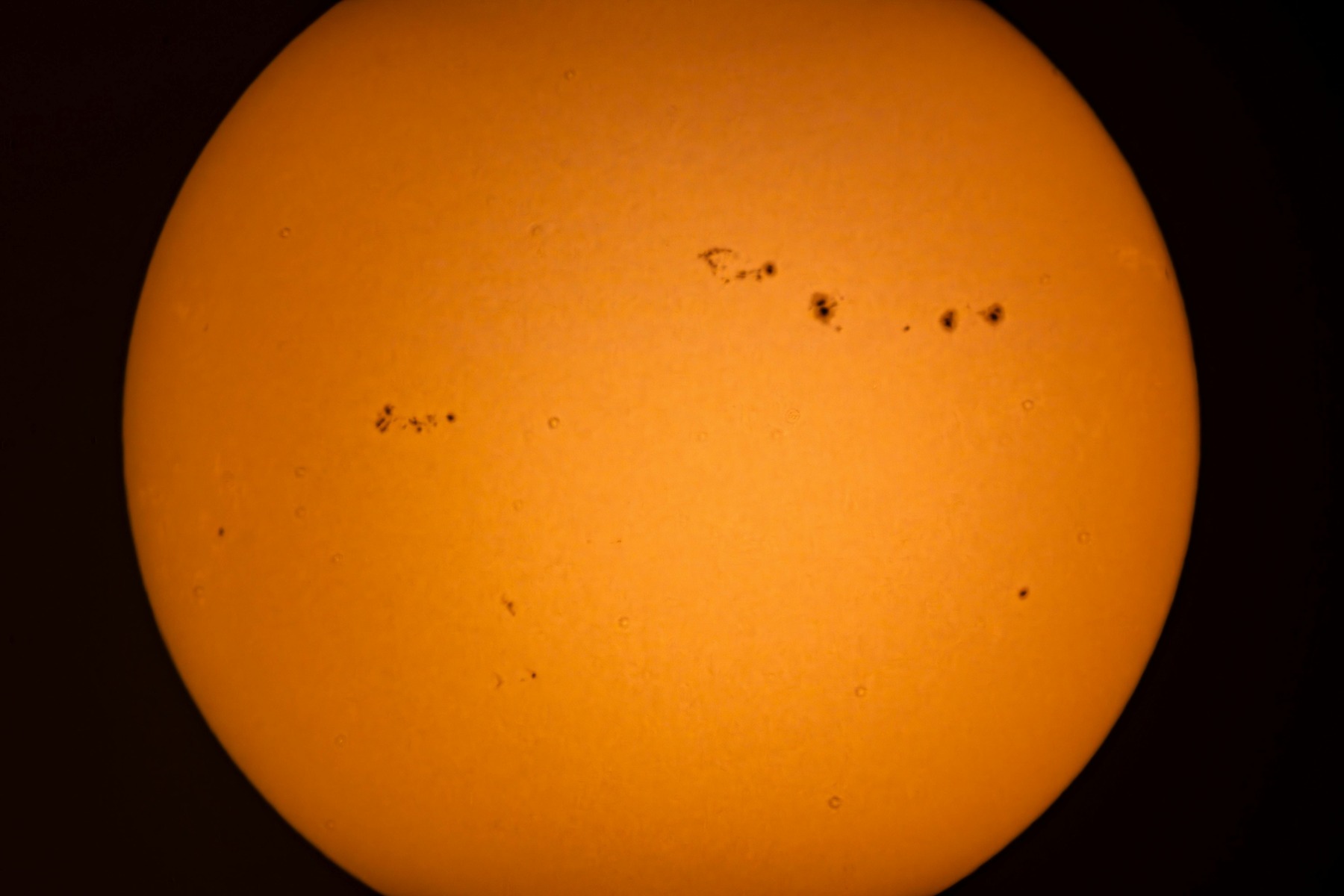
Recent findings from the Solar Orbiter mission reveal an unprecedented look into the mechanism that triggers solar flares – giant bursts of energy from the Sun that can affect space weather and Earth’s technological systems. Scientists now describe the flare onset as a cascading “magnetic avalanche,” where small magnetic changes rapidly escalate into explosive solar activity.
The Magnetic Cascade That Sparks Solar Eruptions
Solar flares are among the most powerful explosions in the solar system, releasing vast amounts of energy in just minutes. They originate when twisted magnetic field lines in the Sun’s atmosphere suddenly rearrange and release their stored energy through a process called magnetic reconnection.
Data captured by Solar Orbiter’s high-resolution instruments – including the Extreme Ultraviolet Imager (EUI), SPICE, STIX and PHI – show that small magnetic strands begin forming and twisting before the flare peaks. These strands reconnect repeatedly, like an avalanche of breaking points, amplifying the energy release in space and time until a full-scale flare erupts.
Detailed Observations from Solar Orbiter
During a close solar pass on 30 September 2024, Solar Orbiter observed a large flare’s birth with rare clarity. In the 40 minutes leading up to the event, EUI captured a dark, filament-like structure of twisted magnetic fields. As reconnection events multiplied, this filament detached and violently unrolled into space, triggering the main flare.
Such high-cadence observations – resolving features changing every two seconds – are rarely possible but provide a three-dimensional picture of flare development that was previously unavailable. Instruments tracking X-ray and ultraviolet emissions also revealed streams of energized particles racing through the Sun’s atmosphere at nearly half the speed of light.
Implications for Space Weather and Technology
Solar flares not only heat plasma to millions of degrees but also launch energetic particles into interplanetary space. These particles and associated coronal mass ejections (CMEs) can disrupt satellite communications, GPS systems and even power grids on Earth when aimed in our direction. Understanding flare initiation is therefore crucial for improving space weather forecasts.
The new “magnetic avalanche” model shows that large flares may not be single, uniform explosions but are built from many smaller, interacting reconnection events. This challenges older theories and gives researchers a refined framework to predict how flare energy grows and spreads.
What Comes Next in Solar Physics
According to researchers, these results open new avenues for heliophysics. The detailed flare observations captured by Solar Orbiter improve our understanding of magnetic reconnection and energetic particle acceleration near the Sun. Future space missions with even higher-resolution X-ray imaging could further untangle the complexities of solar eruptions and their impacts across the solar system.
By combining observations from Solar Orbiter with other missions like NASA’s Solar Dynamics Observatory and the Parker Solar Probe, scientists can build a more complete picture of how magnetic reconnection shapes space weather events.
